
Pawnee Tribal Custody Is Contracted
BIA Office of Justice Services District II states that it has no detention facilities or detention staff and contracts jail services from county jails. Pawnee Nation Division of Law Enforcement provides police jurisdiction and contact information. Neither source identifies a public Pawnee Nation jail. That difference controls the release search.
A tribal or federal Indian-country arrest can result in confinement at a county jail under a contract arrangement. The badge on the arresting officer does not tell a reader which booking system holds the record. Court papers, VINE, the arresting agency, or direct contact with Pawnee Nation Police can help name the physical jail. Once identified, that jail's current roster, custody contact, release sheet, and records custodian become the main sources.
The BIA District II page captured in the project manifest documents this local custody structure:
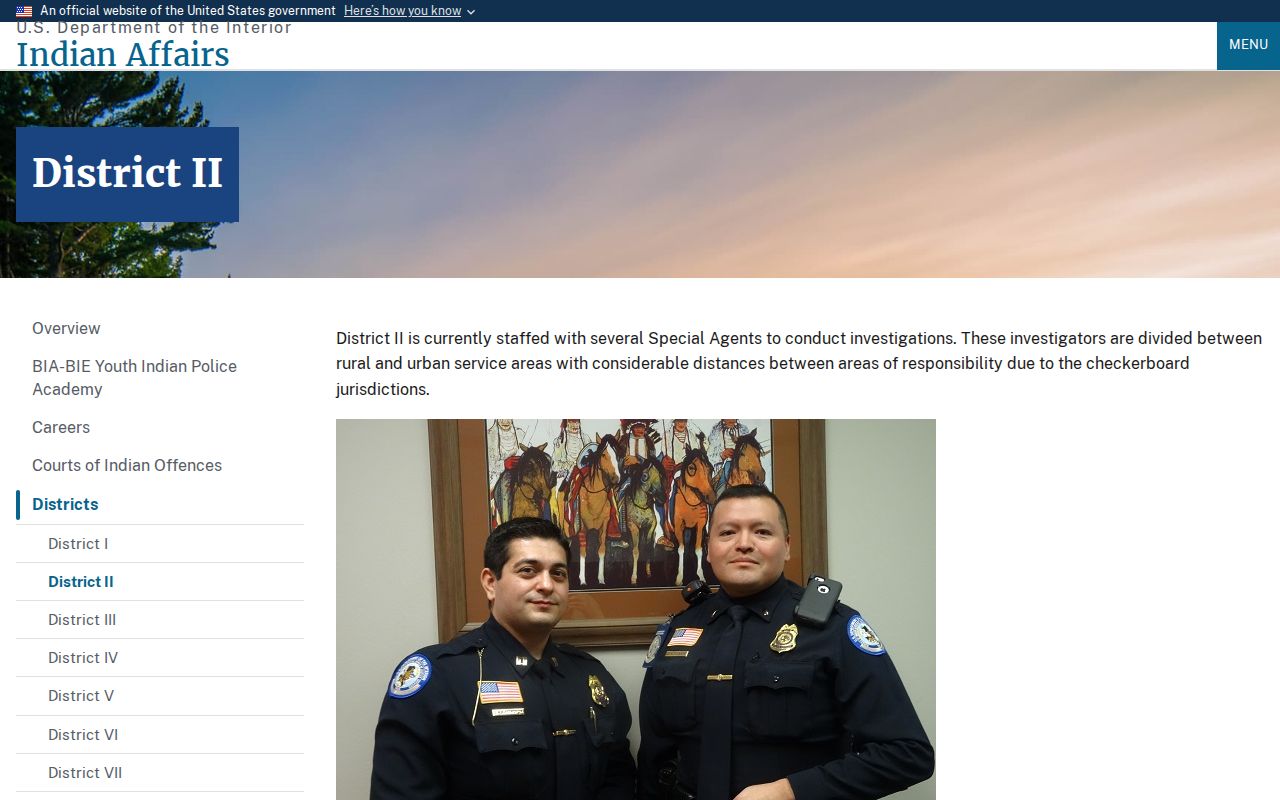
The image supports the absence of a District II detention facility. It should not be read as naming a specific contract jail for any individual booking.
Identify the Pawnee Holding Jail
Start with the last document or agency contact tied to the arrest. Look for a booking facility, detention location, reporting agency, case number, or transfer notation. If Pawnee County Jail is named, use the sheriff's current roster for present custody and call the jail for a real-time check. If a different county jail is named, use that county's official sources. Do not default to Pawnee County Jail merely because the arrest involved Pawnee Nation.
- Ask the arresting agency which jail accepted the person and when the transfer occurred.
- Review the court paperwork for a detention location, remand order, or prosecuting authority.
- Search VINE and read the exact reporting agency and location on the matching record.
- Call the identified jail and ask whether the booking remains in custody or left by release or transfer.
- Request that jail's public release record for the date, time, disposition, and destination.
- Use the responsible tribal or federal court for the legal order and later case status.
When the first search gives no result, retry reasonable name and identifier variations, then return to the agency that made the arrest. A missing roster entry may mean a transfer, release, posting delay, name mismatch, different holding county, or record correction. It is not a stand-alone release finding.
Pawnee Tribal Custody Contacts
Pawnee Nation's law-enforcement office is an agency contact, not a detention-facility listing. It can be asked to identify the arresting unit, court path, or actual holding jail when that information is appropriate to provide. The office should not be described as the source of a jail release record unless it created or maintains the requested document.
1200 Heritage Circle
Pawnee, OK
918-762-3013
Monday through Friday, 8:00 a.m. to 5:00 p.m.
If the person was held by Pawnee County Jail, contact the jail at 500 Harrison Street, Pawnee, OK 74058, 918-762-2565 extension 2. Its current roster updates hourly and covers present county custody only. The Sheriff's Records Division handles the public county release-record request. For a different contract jail, obtain that jail's contact and records procedure from the responsible county.
Note: the Pawnee Nation police address and hours identify an agency office, not a release lobby, jail gate, or family pickup point.
Pawnee Contract Jail Release Records
The physical jail is best placed to confirm when its custody ended and what destination its record names. A focused request identifies the person, booking number if known, and approximate admission date. Ask for the public booking and release sheet, booking and release date and time, release disposition, destination or receiving agency, arresting and holding agencies, public charge and case identifiers, and booking photograph. Ask for a certified copy only when that form is actually needed.
| Record | Fact it can establish |
|---|---|
| Contract jail release sheet | Physical custodian, exit time, disposition, and destination where recorded |
| VINE event | Custody change transmitted by the reporting agency |
| Tribal or federal court record | Legal order, hearing, charge, dismissal, bond, or remand |
| Receiving-agency record | Custody after the contract jail handoff |
A court order time and the jail's physical exit time may differ. VINE may receive the agency update later. Preserve each source's exact time and label. When they conflict, ask the office responsible for that fact whether the record was updated or corrected instead of choosing one without explanation.
Protected juvenile, medical, sealed, expunged, victim, and security information may be withheld or redacted. Request public portions and ask for the legal basis of any withholding. Do not seek an archived copy to evade a court restriction.
Pawnee Tribal Release Destinations
An end to contract-jail custody can lead to the community, another jail, a state authority, federal custody, or another authorized agency. The release record's destination field is critical. Community release should be checked against the responsible court for bond terms or a later appearance. A transfer should be followed into the receiving agency rather than being described as freedom from custody.
- Community release
- The jail reports that the person left its custody without an immediate receiving custodian.
- Transfer
- One custodian ended control as another agency received the person.
- Remand
- A court direction that may return or commit the person to custody.
- Detainer
- A hold or request that may cause an agency handoff after the first case or booking event.
- Discharge
- A term that should be used only in the context and meaning supplied by the responsible custodian.
If Oklahoma state custody follows, use ODOC by DOC number or name, but only after the record shows an ODOC transfer. If federal sentenced custody follows, use BOP. For federal pretrial detention, the federal docket and USMS records are more appropriate because the person may never appear in BOP's sentenced-inmate system. These are separate custody stages.
Pawnee Tribal Release Court Checks
The relevant court depends on the sovereign responsible for the matter. A Pawnee Nation-connected arrest does not by itself prove that a tribal, state, or federal court controls every charge. Ask the arresting agency or examine the paperwork for the case number and court. The court record can explain the legal authority for detention, bond, dismissal, release, or transfer, but only the jail can confirm the physical exit from its facility.
For a related Oklahoma state case in Pawnee County, OSCN Docket Search can show docket events. Select Pawnee County and match by case number when possible. A state docket does not replace a tribal or federal court record, and the absence of an OSCN case does not prove no arrest or detention occurred.
For federal proceedings, use PACER or the federal clerk to locate detention and release orders. A federal court order still may not show the moment a contract jail completed processing. Pair it with the holding jail's record.
Note: identify the prosecuting sovereign from official paperwork before treating any one court database as complete.
Pawnee County Jail Contract Checks
When Pawnee County Jail is the verified contract holder, the sheriff's inmate page answers only whether the person appears in current custody. Its 24-hour and 72-hour reports are booking windows that show name, booking time, charge, and photo when available. They are not released-person lists and do not visibly show a release date or destination.
Use the sheriff-linked VINE search next, then call the jail. Request the release record if the person has left the roster. The Pawnee records page lists copy and transmission charges, but its linked request-form PDF failed on the research date. Phone, office, fax, and administrative-assistant channels remain useful. No local release-processing time, exit door, waiting area, or weekend procedure was found.
The separate Pawnee County Jail release page applies only when that facility is confirmed as the holder. It should not be selected merely from county geography or tribal affiliation.
Federal Pawnee Tribal Custody Transfers
Some Indian-country matters may move into federal custody, but federal channels depend on custody stage. USMS manages federal pretrial detention and prisoner transport and may use contract jail beds. There is no public USMS historical release locator like BOP's. The federal docket can show detention or release orders, while a USMS FOIA request can seek agency records.
BOP primarily serves sentenced federal custody. A person held for USMS in a county jail may not yet have a sentenced BOP record. A later BOP result marked Released or Not in BOP Custody means BOP is no longer the custodian, not that all custody or supervision ended. Check the federal judgment for supervised release and look for another receiving agency when transfer is possible.
If an ICE detainer is mentioned, first ask the holding jail whether ICE actually received the person. Then use the ICE Online Detainee Locator or the relevant ERO field office. No Pawnee County ICE facility or contract was verified. Immigration custody is a separate civil system and should not be inferred from birthplace, name, or arrest context.
Why Pawnee Jurisdiction Differs
Pawnee's distinctive issue is the split between law-enforcement jurisdiction and detention custody. BIA District II contracts jail services, while Pawnee Nation Police has its own jurisdictional and agency role. That structure can send a searcher to a police office, county jail, court, or federal source for different parts of the same event.
The best record chain begins with the actual holder. State which jail booked the person, which agency reported the VINE event, which court issued the order, and which custodian received the person after transfer. Avoid merging those facts under a loose tribal release label. The precision is useful even when the final answer is that the destination is still unconfirmed.
No verified Pawnee Nation jail, BIA District II detention facility, or local tribal released-person feed was found. Clear acknowledgment of those absences directs the search to records that can actually confirm release.